Organizer Kacy Paide's stress-free guide to tackling paper clutter
Professional organizer Kacy Paide tells NPR's Life Kit how to sort active and inactive paperwork, label deadlines and store important documents where they are easy to find.
At a glance
- Professional organizer Kacy Paide advises sorting paper into active and inactive piles and focusing first on documents closest to you.
- Paide suggests labeling active documents with specific due dates and storing key records in a brightly colored folder for easy access.
- The FTC says destroy documents with sensitive information like account numbers and Social Security numbers to prevent identity theft.
Professional organizer Kacy Paide, who has spent more than two decades helping clients manage paper clutter, shares a low-stress approach to organizing documents in an NPR Life Kit guide. Her first message is that the process does not have to be rushed or done in one particular way; people can decide how quickly they want to work through it.
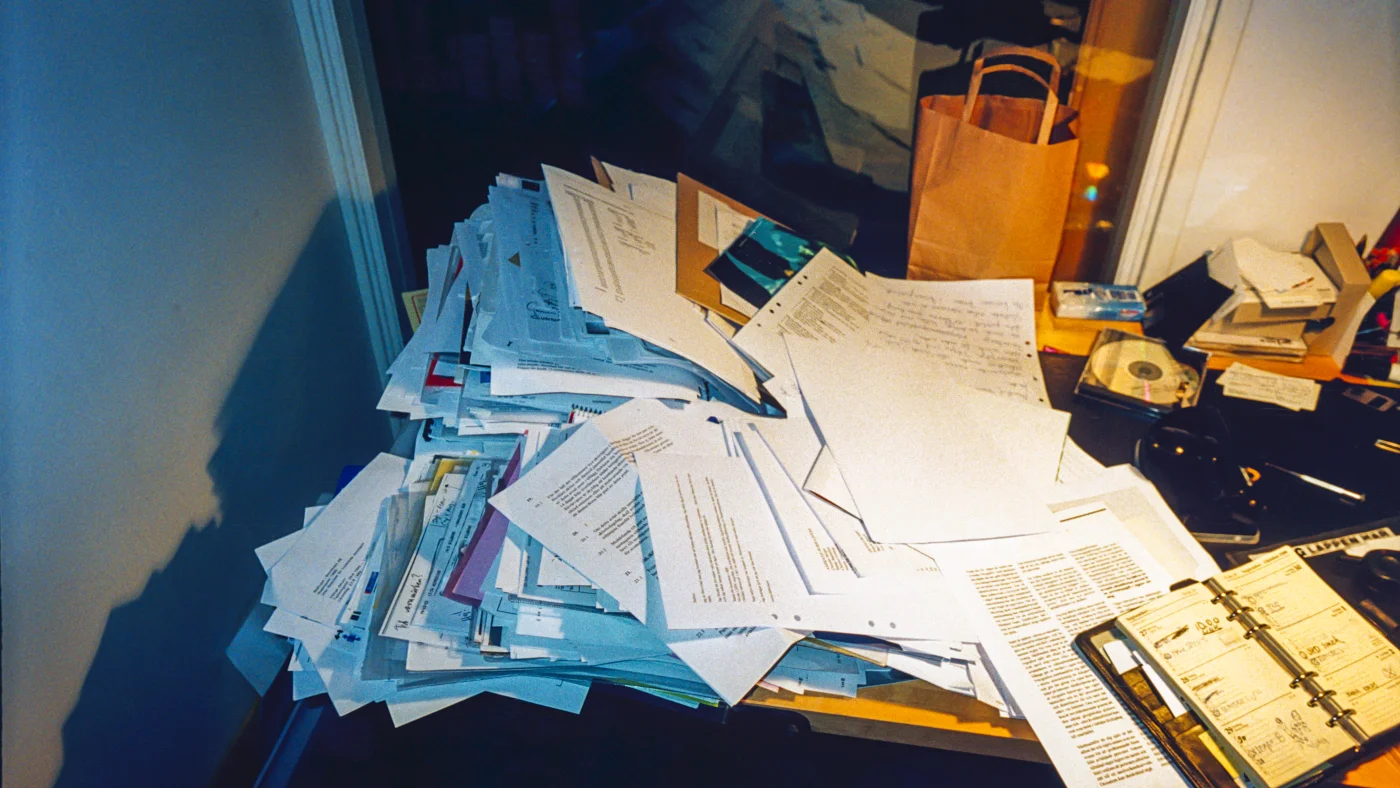
Start with the closest piles Paide advises ignoring the garage or office closet at first. Focus on the paper stacked around your desk or dining table, because urgent documents and action items tend to be closest at hand.
Sort those papers into two groups: active and inactive. Active documents need follow-up, such as a phone call or a bill payment. Inactive documents do not. Receipts, birth certificates and sentimental items like a Valentine's Day card from a parent can be filed away or set aside for later.
For active paperwork, make the deadline obvious. Paide writes the date boldly with a permanent marker on a sticky note and attaches it to the document. She recommends being specific — for example, "due by Nov. 15" — because vague labels like "urgent" or "due now" quickly lose meaning.
What to keep and how to store it Some documents are worth saving, including birth certificates and passports, product manuals for appliances, tax documents and medical records.
The filing system can be as simple or elaborate as you like: alphabetize, color-code or label items, or skip those steps. The best system is the one you will actually use, Paide says.
She prefers a brightly colored folder for the most important documents, such as passports and marriage certificates, so they stand out. She places that folder at the front or back of a file box as a "bookend to your filing system," avoiding the need to rifle through paper. Paide also likes simple file folders labeled with sticky notes written in permanent marker, which lets her reuse them if she changes her sorting plan. File boxes stored on bookshelves can create a visual filing system that is "beautiful and approachable," she says.
Decide what to shred and what to let go Not every piece of paper needs drawer space. When unsure whether to keep something, Paide suggests asking yourself what situation would require you to produce that document.
Shredding everything with your name and address is not necessary, she says. The Federal Trade Commission advises destroying anything containing sensitive information to protect against identity theft, including account numbers, birth dates, passwords, PINs, signatures or Social Security numbers. Paide says people should shred to their own comfort level.
For sentimental or difficult paperwork — old letters, divorce papers or greeting cards — Paide recommends asking a family member or friend for help. Voicing thoughts about the documents can help people decide quickly whether to keep or toss them.
Finally, do not try to declutter all your paper at once. Start small if needed, working in 25-minute sessions. Organizing is an ongoing process that requires maintenance and change.
Source: NPR News.
Questions and answers
- How should I start organizing paperwork?
- Start with paper piles near your desk or dining table, not the garage or office closet. Sort documents into active, which need follow-up, and inactive, which can be filed or set aside.
- What documents should I keep and where?
- Keep birth certificates, passports, product manuals, tax documents and medical records. Paide suggests putting especially important items in a brightly colored folder at the front or back of a file box.
- Do I need to shred everything?
- No. The FTC advises destroying anything with sensitive information, such as account numbers, birth dates, passwords, PINs, signatures or Social Security numbers, but Paide says you can shred to your comfort.