Commentary: Yung Miami's 'Spend Dat' and America's Grift Economy
An NPR commentary argues Yung Miami's 'Spend Dat' is the anthem of a grift economy, tracing the song's summer controversy and Boots Riley's 'I Love Boosters.'
At a glance
- An NPR commentary argues Yung Miami's 'Spend Dat' is the anthem of America's grift economy in 2026.
- The essay ties the song's summer backlash to a call by India.Arie for a boycott of the track.
- It also discusses Boots Riley's 'I Love Boosters' and Yung Miami's platinum success and defense of the song.
An NPR commentary argues that Yung Miami's hit "Spend Dat" is the defining anthem of a year shaped by fraud, debt and the politics of consumption.
The piece, published by NPR News, describes the song as a "get-money flex" aimed at scammers and boosters, but says a darker reading lies beneath its appeal. It calls the track an inflation indicator like no other and "our most American anthem of the year," reflecting a culture fixated on money, status and getting over.
A video that looks backward
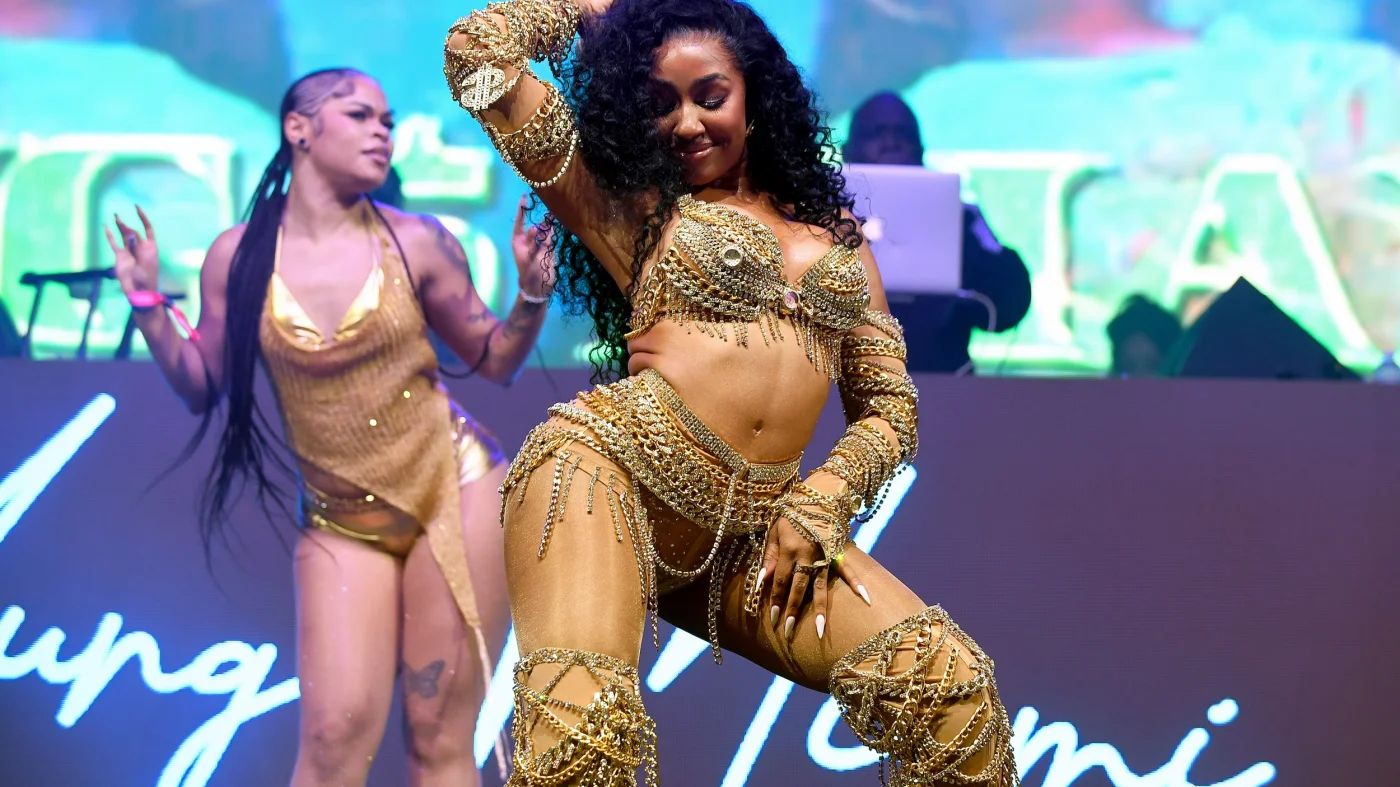
According to the commentary, the song's video evokes early-2000s strip-club imagery, a style the author says now feels dated next to newer money-making tools such as prediction markets, which let people bet on democracy, and buy-now, pay-later loans that deepen debt.
The essay notes that the summer's backlash included a public denouncement by singer India.Arie, who called for Black listeners to boycott the Billboard-charting song. It says the track drew criticism as culturally degrading and stereotypical, while noting that India.Arie herself faced pushback for saying that what people consume influences them.
Boots Riley and the politics of art
Around the same time, the film "I Love Boosters" arrived on streaming. The commentary describes its premise: Keke Palmer plays a booster selling high-end stolen clothing out of an abandoned chicken restaurant while dreaming of her own fashion career, and the story frames her small-scale crime as one cog in a larger exploitative system.
The essay cites director Boots Riley, an avowed communist and former frontman of the Bay Area rap group The Coup. On the podcast Downstream, he said labeling his work "political" suggests other art is neutral. The commentary agrees, arguing that art which magnifies the status quo is itself a form of propaganda.
The piece reports that "Spend Dat" went platinum the same week Yung Miami appeared on "The Breakfast Club" to promote her solo debut, "Watch Dis." Asked about the criticism, she defended the song as inspirational music that "builds you up to want to be somebody."
The essay also invokes W.E.B. Du Bois's essay "Criteria of Negro Art," written a century ago, and a comic strip about Black capitalism whose point is that you cannot buy your way out of a system built on selling you. It concludes that the line between the mark and the con artist has blurred.
Source: NPR News.
Questions and answers
- Why was Yung Miami's 'Spend Dat' criticized?
- Singer India.Arie publicly denounced the song and called for a boycott. The commentary says critics described it as culturally degrading and built on stereotypical portrayals.
- What is Boots Riley's 'I Love Boosters' about?
- The film stars Keke Palmer as a booster selling stolen high-end clothing while harboring her own fashion ambitions, and it frames her petty crime as part of a larger exploitative system.
- How did Yung Miami respond to criticism of 'Spend Dat'?
- On 'The Breakfast Club,' she defended the song as inspirational music that "builds you up to want to be somebody," according to the commentary.