US and Japan Agree to Build Joint Missile Production Facility in Japan
The allies will co-produce advanced air-to-air missiles for F-35 fighter jets amid heightened security concerns in the Asia-Pacific region.
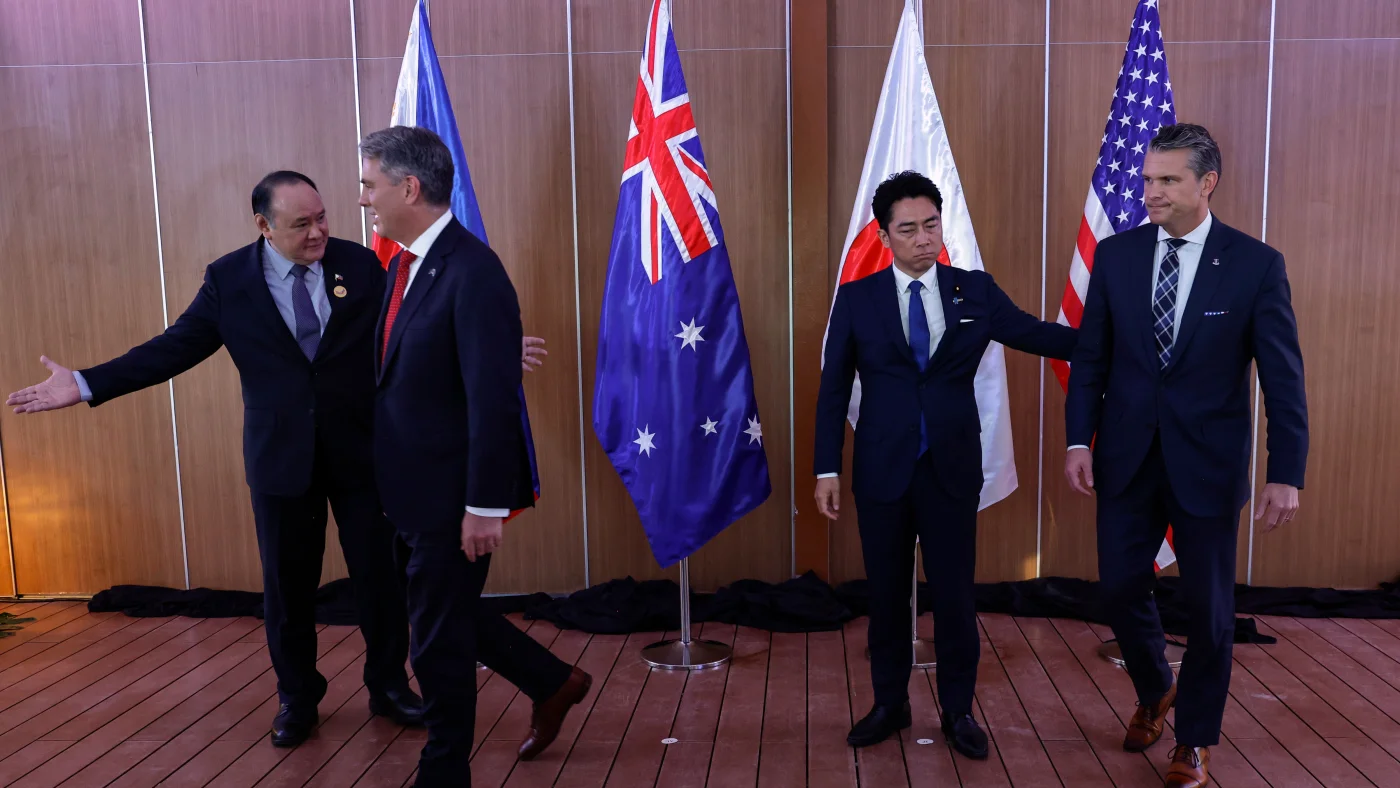
At a glance
- The US and Japan will establish a Japanese facility to jointly assemble and inspect AMRAAM missiles.
- The project, titled Operation Supercharge, provides key munitions for F-35 fighter aircraft used by both nations.
- The agreement was announced in Cebu, Philippines, amid shared concerns regarding Chinese naval activity.
The United States and Japan have reached an agreement to construct a manufacturing facility in Japan to jointly produce advanced medium-range air-to-air missiles, Japanese Defense Minister Shinjiro Koizumi announced on Wednesday.
Speaking at a news conference in Cebu, Philippines, Koizumi revealed the initiative, dubbed "Operation Supercharge," following a meeting with U.S. Defense Secretary Pete Hegseth. The leaders met on the sidelines of regional defense talks involving Southeast Asian nations and their international partners.
Under the agreement, the two nations will establish a final assembly and inspection plant in Japan for the Advanced Medium-Range Air-to-Air Missile, commonly known as AMRAAM. Koizumi noted that these munitions are critical components for F-35 fighter aircraft, which are operated by both the U.S. and Japanese militaries.
Koizumi stated that he and Hegseth shared a sense of crisis regarding regional stability and pledged to enhance alliance deterrence with greater urgency. Both officials reaffirmed support for an international order that rejects attempts to alter the regional status quo by force.
Rising Regional Tensions
The announcement comes against a backdrop of growing concerns over Chinese military activity. Koizumi cited an incident this week in which three Chinese destroyers accompanied by a coast guard ship sailed through the Osumi Strait south of Kyushu into the Pacific Ocean, marking the first time Japan had observed that specific fleet configuration. Japan has actively accelerated its defense buildup in its southwestern regions in response to maritime maneuvers.
In related discussions with defense ministers from the Association of Southeast Asian Nations (ASEAN), Hegseth reiterated Washington's defense commitments. He described the U.S. posture as "strong, quiet and clear," aiming to deter aggression while avoiding unnecessary public escalation. Hegseth also reiterated assurances to the Philippines regarding security cooperation in the South China Sea, where territorial disputes remain tense.
Australian Defense Minister Richard Marles similarly affirmed that allied forces will continue operations to maintain freedom of navigation across the Pacific despite ongoing regional friction.
Source: NPR News.
Questions and answers
- What will the new US-Japan defense facility produce?
- The facility will handle the final assembly and inspection of Advanced Medium-Range Air-to-Air Missiles (AMRAAM), which are utilized on F-35 fighter jets.
- What is the name of the joint missile initiative?
- Japanese Defense Minister Shinjiro Koizumi identified the joint defense effort as "Operation Supercharge."
- Where was the US-Japan missile agreement announced?
- The agreement was announced by Japanese Defense Minister Shinjiro Koizumi during defense meetings held in Cebu, Philippines.

















