Trump signs proclamation declaring Oval Office a national monument
The US president says the order will stop future administrations from changing his gold-covered redesign of the Oval Office and Cabinet Room.
At a glance
- Trump signed a proclamation on Thursday making the Oval Office and Cabinet Room national monuments.
- He said the move would stop future administrations from altering his gold-covered redesign of the rooms.
- The signing came days after his party's midterm defeats, as Democrats won control of Congress.
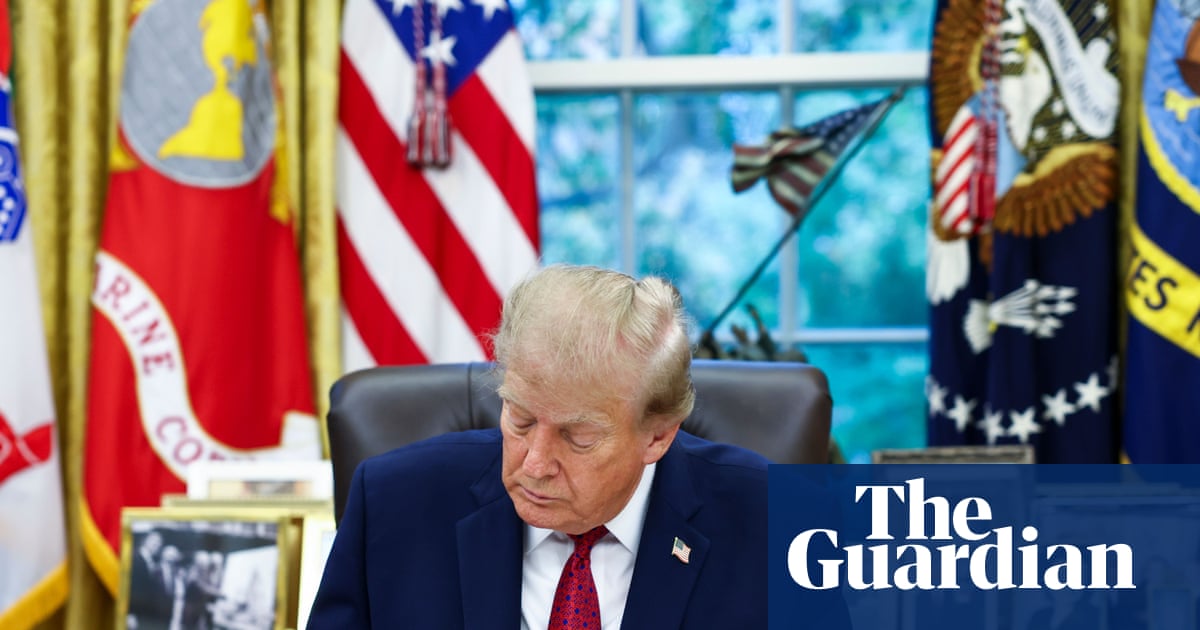
Donald Trump signed a proclamation on Thursday declaring the Oval Office and the Cabinet Room national monuments, a move he said would prevent future administrations from changing the design of the two West Wing rooms. Speaking to reporters from behind the Resolute Desk in the gold-covered Oval Office, the US president said the document would make them "a landmark for the ages".
'Nobody be allowed to come and take it down'
Trump said the proclamation would ensure the rooms were not "touched by anybody, destroyed, ripped down by stupid people, in order to build something in a slightly different shape". He added: "I just thought it was very important that nobody be allowed to come and take it down and try and do something with it."
He also said that if anyone tried to knock down walls, he should be called "wherever I may be", and that he would return to make sure it never happened. Occasionally, he said, someone might suggest putting up better glass, but his answer was: "no, you're not going to do anything. We're going to leave this as it is."
Renovation projects across Washington
Since returning to office, Trump has begun a series of White House "beautification" projects, most notably the demolition of the East Wing to make way for a $600m ballroom and the building of a permanent granite helipad on the South Lawn.
He defended the wider renovation work, saying the building's exterior had suffered years of deterioration. He pointed to cracked windows, damaged stonework and broken decorative features, and said exterior columns had been in "horrible shape". He said he had paid for repairs and hired skilled workers to restore them.
Midterm defeats and a 'Veto' cap
The signing came days after Trump's party suffered historic defeats in the midterm elections. Democrats won control of Congress and made significant gains in states including Texas, Kansas, South Carolina and Iowa, campaigning on affordability and tackling corruption.
On the desk beside him as he signed was a red baseball cap bearing the word "Veto", an explicit reminder of his threat to block bills passed by the new Democratic-controlled Congress next year.
Trump's redesign of the Oval Office has drawn criticism, including from former president Barack Obama, who joked that "he's got the White House looking like Saddam Hussein opened a Cheesecake Factory. Just gold everywhere." Treasury secretary Scott Bessent appeared to respond by dining at a Cheesecake Factory.
In a final appeal before the midterm elections, Trump held a press conference highlighting the delayed results of his $14m renovation of the Lincoln Memorial reflecting pool, blaming Joe Biden for algae that had accumulated in its waters. Two days later, as the scale of his party's losses became clear, he led a media tour of the White House ballroom construction site.
Source: The Guardian.
Questions and answers
- What did Trump's proclamation do?
- It declared the Oval Office and Cabinet Room national monuments. Trump said this would prevent future administrations from changing his design of the two West Wing rooms.
- Why did Trump sign the proclamation?
- He said he wanted the rooms preserved and not "touched by anybody, destroyed, ripped down" in order to build something in a different shape.
- What other White House projects has Trump carried out?
- He has demolished the East Wing to make way for a $600m ballroom and built a permanent granite helipad on the South Lawn, among other "beautification" work.