Spain train crash kills 69, injures over 100 in second deadly collision this year
Prime Minister Pedro Sánchez says trust in Spain's high-speed rail is broken after two trains collided near Urda, with victims from at least 23 countries.
At a glance
- Two trains collided near Urda in central Spain, killing at least 69 and injuring over 100 people.
- The crash involved a Renfe train and an Iryo train traveling from Madrid toward Andalucía.
- It is the second deadly train collision this year in Spain, with victims from at least 23 countries.
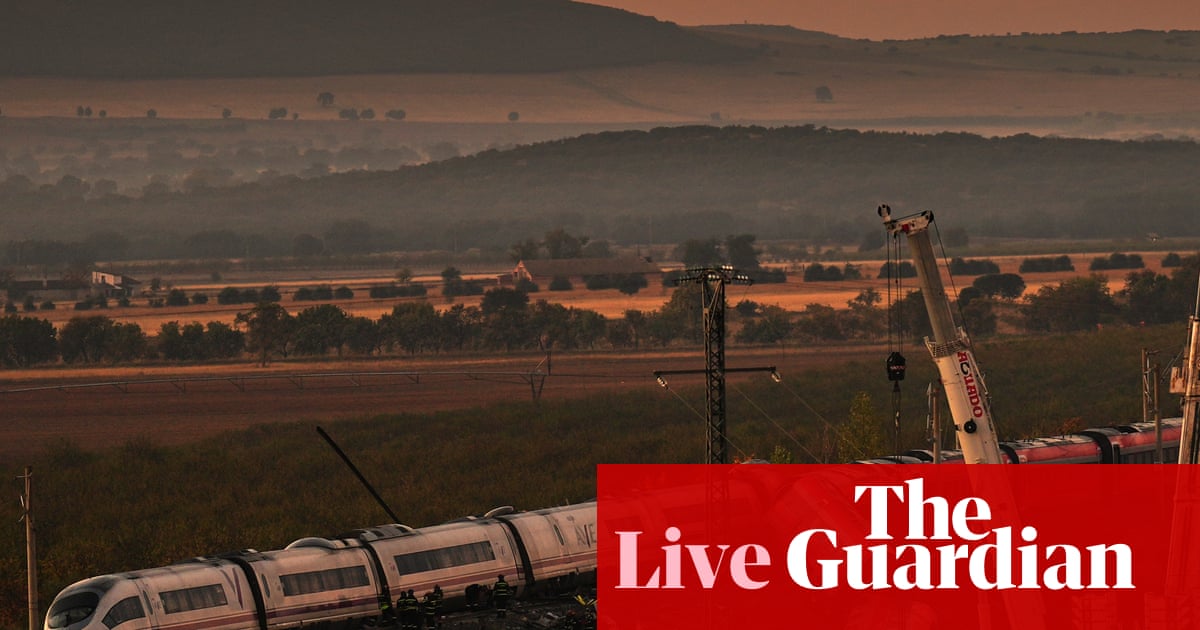
Two trains — one operated by state-owned Renfe and the other by private company Iryo — collided just before 9am on Wednesday near Urda in the central region of Castilla-La Mancha, killing at least 69 people and injuring more than 100, Spanish Prime Minister Pedro Sánchez said.
The crash occurred as both trains were travelling from Madrid towards Andalucía in southern Spain. After the Iryo train came to a halt, the Renfe train slammed into its rear, knocking several carriages off the tracks.
Sánchez confirmed that victims included people from at least 23 different foreign countries, and that the government was working to provide information to families as quickly as possible. He described the incident as unacceptable for a country with a strong high-speed rail system, noting it was the second deadly train collision this year.
The previous crash occurred nine months ago near Adamuz in Andalucía, also involving Renfe and Iryo trains, which killed 46 people and injured dozens.
"Trust in high-speed rail has been broken," Sánchez said. "Our task isn't merely to investigate the causes, but also to provide solutions to strengthen our nation's high-speed rail system."
Transport Minister Óscar Puente, facing growing pressure to resign, dismissed calls for his resignation and pledged to focus on solving problems and restoring public confidence. He suggested the LZB signalling system, which automatically halts trains when the line ahead is occupied, had failed before the crash, though such incidents were not uncommon.
Puente stated that once the system went down, control reverted to human operators, and that responsibility appeared to lie within the Madrid control centre of state infrastructure operator Adif.
Investigation and response
The government has launched a full investigation into the causes of the crash, with Sánchez vowing that if failures of organisation or control are found, action will be taken. He emphasized the need to offer solutions to prevent future tragedies of similar scale.
National impact
The repeated accidents have sparked a national debate on rail safety in Spain. The high-speed rail network, long considered a point of national pride, now faces intense scrutiny. Public trust in the system has been severely damaged, and the government is under pressure to implement immediate reforms.
Source: The Guardian World
Questions and answers
- How many people died in the Spain train crash?
- At least 69 people were killed and more than 100 were injured in the collision near Urda, according to Prime Minister Pedro Sánchez.
- What caused the train crash in Spain?
- Transport Minister Óscar Puente said the LZB signalling system failed before the crash, causing control to revert to human operators in the Madrid control centre of Adif.
- Is this the first deadly train crash in Spain this year?
- No, it is the second. Nine months earlier, two trains collided near Adamuz in Andalucía, killing 46 people.

















