Spain train crash: at least 69 killed as AVE train hits Iryo service near Toledo
Investigators are examining how a Renfe high-speed train was told to restart after a signalling failure and struck an Iryo train on the same track, killing at least 69 people.
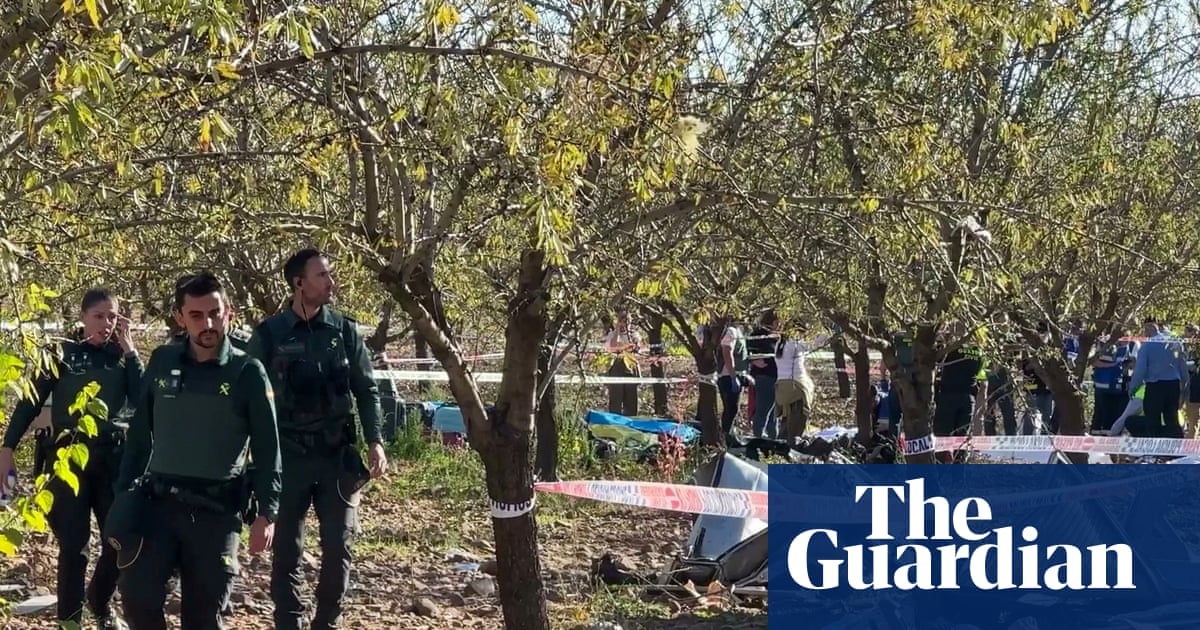
At a glance
- At least 69 people died when a Renfe AVE train hit an Iryo train from behind near Toledo on Wednesday morning.
- Both trains had been halted by a signalling failure; audio shows a controller told the AVE driver to proceed at normal speed.
- Transport minister Óscar Puente called the instruction an "inexplicable decision"; investigators will examine the signalling failure.
At least 69 people have died after a high-speed Renfe AVE train running from Madrid to Seville struck another train from behind near Toledo on Wednesday morning.
Both trains had been brought to a stop earlier because the signalling system failed. An audio recording released to Spanish media by the government indicates that a controller in Madrid then told the driver of the state-owned AVE service to set off again "con marcha normal" — under normal operations — rather than at low speed. The AVE train ran into the train ahead of it, operated by the private company Iryo. The leading carriages of the AVE train and the rear carriages of the Iryo train were destroyed, and other carriages came off the rails.
The transport minister, Óscar Puente, described the instruction as an "inexplicable decision".
Safeguards that should have prevented it
High-speed lines normally carry several layers of protection, including automatic train operation systems meant to keep trains on the same track from getting close to one another. Rear-end collisions on such networks are rare.
The closest comparison is the 2011 crash in Wenzhou, China, where a high-speed train hit a stationary express ahead of it and 40 people died. In the UK this year, two East Midlands trains collided from behind in Bedford — the country's first fatal crash of that kind in 40 years — on a stretch of line without automatic train operation, after the driver apparently failed to slow for a danger signal.
What investigators will examine
While the audio suggests human error played a central part, other questions remain open, above all what caused the signalling system to fail in the first place. The German-designed train control system on the line is being phased out, and the chief executive of Iryo recently told a senate inquiry that disconnection was a "frequent issue" there.
Investigators are expected to trace the sequence of events and the technical factors that allowed the Renfe train to move while the Iryo train stayed where it was. They will also want to establish what circumstances or pressures could have led a controller to give that instruction. Track controllers increasingly work from remote computer centres but remain acutely aware of the responsibility the job carries.
The government will also want to show the disaster is unconnected to a head-on collision on the same line at Adamuz in January, when one train derailed, apparently because of a short section of faulty or missing rail. Train drivers had been due to strike even before this week's crash, in protest at under-investment in the railway and its staff, which unions link directly to safety.
Spain's high-speed network, which links Madrid with Seville and Barcelona, is admired by planners abroad and has cut the journey to Andalusia to two and a half hours — half the time by car and a third of the time by coach. Across the sector, fatalities of all kinds have trended down since 2010, and in most years and most countries no passenger is killed in a train crash. But concern about under-investment, sharpened by falling fare revenue during the pandemic and rising costs and subsidies, is not unique to Spain.
Source: The Guardian World.
Questions and answers
- How many people were killed in the Spain train crash near Toledo?
- At least 69 people died when the Renfe AVE high-speed train travelling from Madrid to Seville hit the Iryo train ahead of it from behind. The front carriages of the AVE train and the rear of the Iryo train were destroyed.
- What caused the train crash in Spain?
- Both trains had stopped because the signalling system failed. Audio released by the government indicates a controller in Madrid told the AVE driver to restart "con marcha normal", under normal operations, rather than at low speed. What caused the initial signalling failure is not yet known.
- What will investigators be looking at?
- Investigators will trace the sequence of events and the technical issues that allowed the Renfe train to proceed while the Iryo train stayed put, and what pressures led to the instruction. Iryo's CEO has called signalling disconnections a "frequent issue" on the line.

















