Southern California brush fires force evacuations and power shutoffs
Malibu blaze and other fires in Azusa and Camp Pendleton prompted evacuations as utilities cut power to more than 150,000 customers amid hot, gusty Santa Ana winds.
At a glance
- Brush fires in southern California forced evacuations in Malibu, Azusa and at Camp Pendleton.
- More than 285 firefighters battled the Bryson fire, which grew to about 200 acres in the Santa Monica Mountains overnight.
- Utilities cut power to more than 150,000 customers as Santa Ana winds raised fire risk through Friday afternoon.
Brush fires fanned by hot, dry and gusty weather forced evacuations across southern California, and tens of thousands of people woke in the dark after their electricity was switched off.
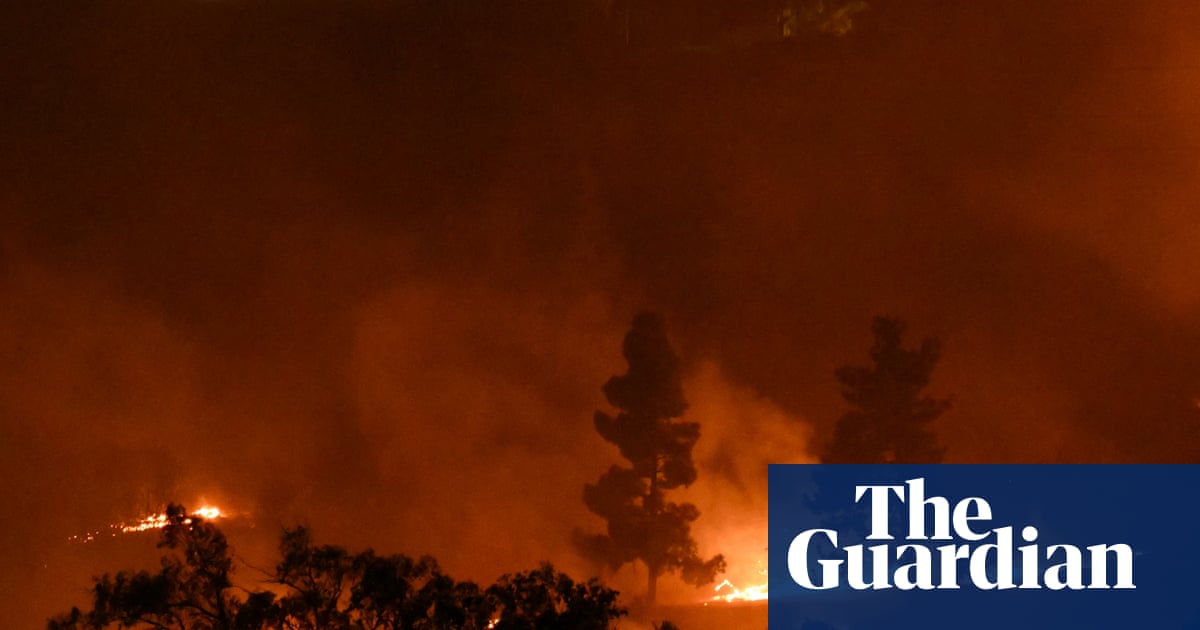
The most serious blaze was burning in Malibu, west of Los Angeles, where evacuation orders and warnings covered a large swathe of the Santa Monica Mountains. More than 285 firefighters battled the Bryson fire overnight; it grew to about 200 acres (81 hectares) and threatened a Los Angeles county juvenile detention and rehabilitative facility. Fire officials planned to give an update on Friday morning.
A large cloud of black smoke over the hilltops could be seen on nearby cameras and from miles away. Wind gusts of up to 30mph (48km/h) were reported early Friday and were forecast to increase, the National Weather Service said. With humidity levels dropping, the service said, "this will favor a critical fire weather threat."
Elsewhere, a wind-driven fire in Azusa, north of Los Angeles, burned more than 40 acres (16 hectares) on Thursday and briefly prompted evacuation orders for a neighborhood in the foothills of the San Gabriel mountains. Forward progress on that blaze has been stopped. At Camp Pendleton, the military base north of San Diego, evacuation orders issued for the Las Flores area on Thursday afternoon were lifted by evening, officials said.
Region on alert
California faces several days of extreme fire-risk weather, with dry conditions, high temperatures and gusty winds. Dry, warm north-east winds known as Santa Anas, which blow from the interior of southern California toward the coast and offshore, were forecast in the south of the state, with the strongest winds expected through Friday afternoon.
"It's a pretty widespread event of elevated fire weather, so the whole SoCal region should really be on alert," said Rose Schoenfeld, a meteorologist with the National Weather Service.
Schoenfeld said the Santa Ana winds would not be as strong as during the Palisades and Altadena fires in January 2025, when gusts reached 60mph to 100mph (96km/h to 160km/h). Those fires killed more than 30 people and destroyed thousands of homes.
Pre-emptive power cuts
Because power equipment has sparked some of the state's worst wildfires in recent years, utilities proactively shut off power to more than 150,000 customers across California.
In Los Angeles, the city's mayor, Karen Bass, who faced criticism over her city's response to the deadly fires in 2025, directed the fire department to deploy personnel and equipment ahead of the winds. The fire department also requested assistance from the state's office of emergency services.
Source: The Guardian.
Questions and answers
- Where are the California brush fires burning?
- The largest blaze, the Bryson fire, is in Malibu west of Los Angeles, in the Santa Monica Mountains. Fires also burned in the city of Azusa, north of LA, and at Camp Pendleton, the military base north of San Diego.
- Why are there power shutoffs in California?
- Utilities proactively cut power to more than 150,000 customers because power equipment has sparked some of the state's worst wildfires in recent years. Dry, hot and gusty Santa Ana winds raised the risk of fires spreading quickly.
- How strong are the Santa Ana winds?
- Wind gusts of up to 30mph (48km/h) were reported early Friday and were forecast to increase, with the strongest winds expected through Friday afternoon. A meteorologist said they would not be as strong as the 60mph to 100mph gusts during the January 2025 fires.

















