Panipat textile recycling workers suffer amputations amid safety gaps
Guardian reporting from Panipat found severe limb injuries among workers shredding discarded clothes, with weak safety oversight and largely informal employment.
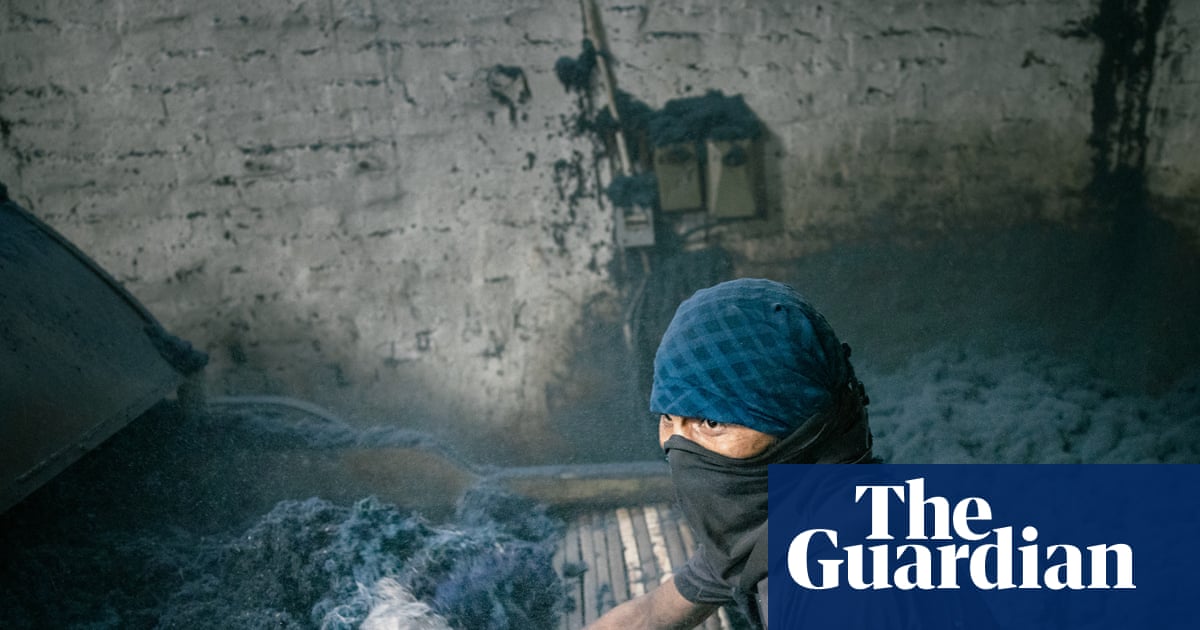
At a glance
- Suraj Kumar, 19, lost both arms in late August after an electrical short circuit pulled him into a shredding machine in Panipat.
- An activist estimates at least one worker a day loses a limb in Panipat; the Guardian monitored six severe limb injury cases in one week.
- Most Panipat textile workers are informally employed, leaving injured workers with little compensation or social security.
Suraj Kumar, 19, lost both arms in late August after an electrical short circuit pulled him into a shredding machine at a textile recycling factory in Panipat, Haryana, the Guardian reports. He had travelled from West Bengal and worked for three months feeding discarded clothes into shredders, hoping to send money to his parents. He said he wished he had died rather than lose both arms and fears becoming a financial burden.
Panipat, by some estimates, processes more than 1m tons of used clothing a year, one of the world's largest textile recycling hubs. Its 20,000 factories employ about 300,000 people, turning clothes discarded in the US, Canada and Europe into yarn and finished products including home furnishings for H&M Home, Ikea, Primark, Tesco and Walmart.
Injuries and weak oversight
Ramesh Chaudhary, an environmental activist who has worked in Panipat's labour department, has tracked injuries for five years. He estimates at least one worker a day loses a limb, sometimes up to five. He gathers reports through labour contractors and says not all reach him. Between 17 and 24 August, the Guardian monitored reports from 11 private and two government hospitals in Panipat and found six cases of textile workers with severe limb injuries: two lost an arm, one lost both, one lost a hand, one lost a leg and one lost fingers.
Chaudhary attributes injuries to missing safety mechanisms. The Guardian says during visits to spinning units and factories it did not see anyone wearing safety gear, and none of workers interviewed reported safety training. India's 1948 Factories Act requires owners to protect health and safety and report serious accidents. Sandeep Sachdeva of Safe in India Foundation said buyer audits focus more on commercial requirements and product quality than workplace safety, while government inspectors must inform factories before visits, undermining inspections.
Livelihoods lost
Ramashankar Singh, in his fifties and from Bihar, worked 18 years in Panipat before a hot ball bearing fell on his foot last year; infection led to leg amputation above knee. He said the owner promised another job and help with disability pension, but neither happened; he relies on a charity-provided prosthetic. Indrapal Singh lost an arm in 2017 after his hand was caught in a carding machine. He spent six years in court, received no compensation, and said police told him he had signed papers withdrawing complaint, which he disputes because he cannot read or write. He receives a government pension of 5,700 rupees (£45).
India's textile industry directly employs more than 45 million people, second only to agriculture, with an estimated 92% informally employed. Ina Bahuguna of Reverse Resources said more than 90% of Panipat workers are informal; formal contracts and social security mostly cover management, clerical and some specialised roles. Police officer Arvind Kumar said three workplace injury cases were registered at his station this year, including a death, and fewer than 1% of such cases reach police. Most are settled outside formal legal system, he said. Suraj's family is grateful factory owner covered hospital bills and is unsure whether to file complaint.
Source: The Guardian Business.
Questions and answers
- What happened to Suraj Kumar in Panipat?
- Suraj Kumar lost both arms after an electrical short circuit propelled him into a shredding machine at a textile recycling factory in late August. He had worked there for three months.
- Why are textile recycling workers in Panipat getting injured?
- Activist Ramesh Chaudhary says machinery often lacks safety mechanisms. The Guardian did not see safety gear during visits and workers reported no safety training; oversight is also weak.
- Are Panipat textile workers entitled to compensation?
- Most are informally employed without formal contracts or social security. Some receive one-time payments, but cases are often settled outside the legal system, and workers can struggle to get medical bills or compensation.















