Manx shearwaters get jet lag on flights home, study finds
Research in the journal Science suggests the seabirds' internal clocks fall out of sync with the sun as they race back across the Atlantic, nudging them slightly off course.
At a glance
- A study in the journal Science finds Manx shearwaters appear to get jet lag on long flights home across the Atlantic.
- Researchers say the birds' internal clocks fall out of sync with the sun, which they use to navigate.
- The largest error recorded, seven degrees, put birds about three miles off course on a 600-mile trip.
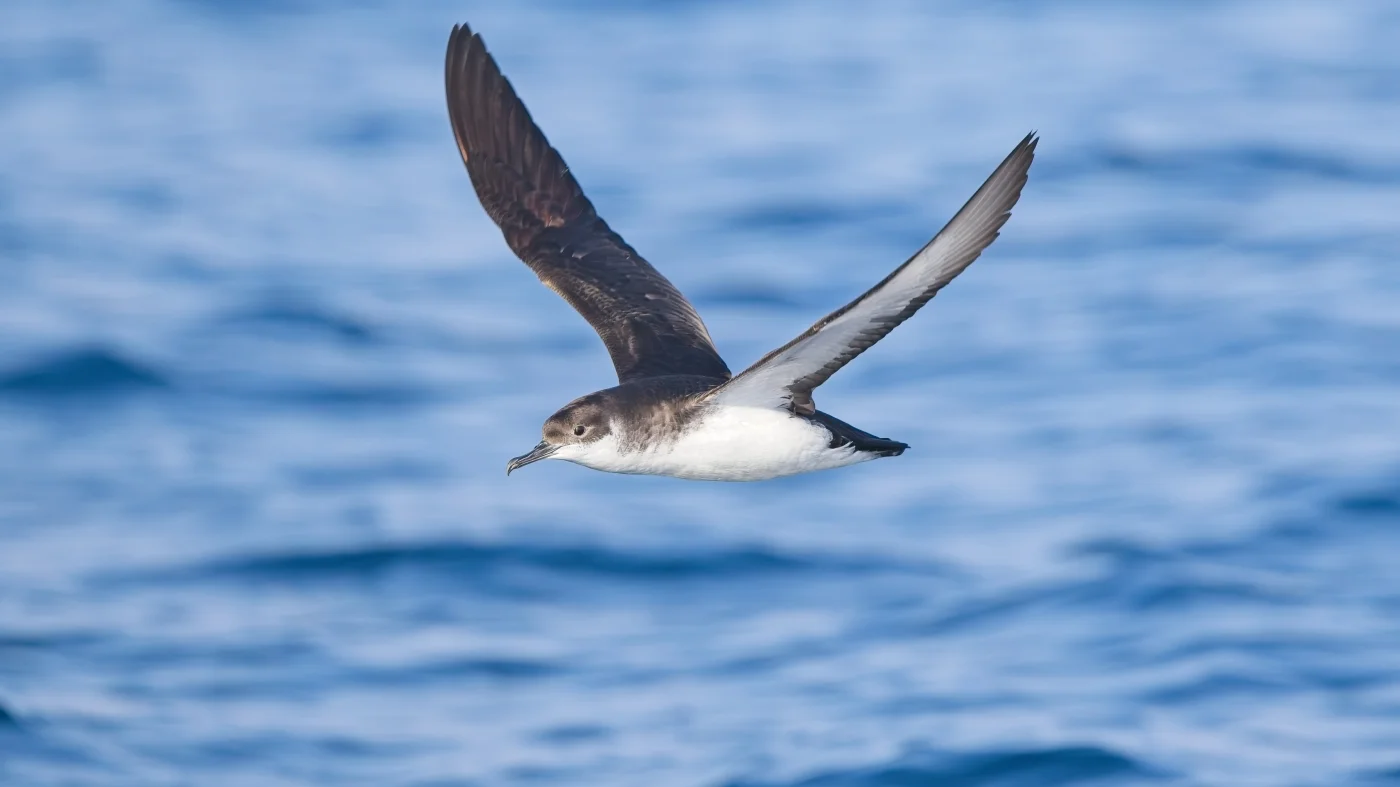
Manx shearwaters appear to experience a form of jet lag, according to research published in the journal Science. The seabirds, which are common in the British Isles, fly slightly off course on long journeys across the Atlantic because their internal clocks fall out of sync with the sun's position in the sky, the authors say.
Manx shearwaters look a little like seagulls, but they are "actually very closely related to an albatross," said Patrick Lewin, a behavioral ecologist at the University of Oxford. The birds mate for life and lay a single egg. Parents take turns incubating it: one sits on the egg nonstop while the other heads out to sea, scouring the North Atlantic for fish and squid, often hundreds of miles from the nest, for up to two weeks.
Once a bird has eaten its fill, Lewin said, "they absolutely bomb it back to their colony," often covering the journey home in about a day. That raised the question of whether the birds feel jet lag — or, more aptly, flap lag.
Navigating by the sun
To find out, Lewin drew on GPS trackers his colleagues had fitted to shearwaters over 20 years, which recorded their flights out to the Atlantic and back.
Manx shearwaters are thought to use the sun as a compass, which requires knowing the time of day. In the morning the sun is in the east, around midday it lies to the south in the northern hemisphere, and in the evening it is in the west. A bird with the wrong internal time would fly the wrong way — and that is what the researchers observed. As the shearwaters rushed home to their partners and eggs, they veered slightly off course.
The effect was small. A seven-degree error, the largest deviation recorded, pushed a bird only about three miles off track on a 600-mile journey. "It's a really small addition," Lewin said.
Outside reaction
Alice Boyle, a biologist at the Centre for Animals on the Move at Western University in Ontario, Canada, who was not part of the study, called the paper "so cool." She noted that almost every creature, from corals to chipmunks, has to navigate its environment, yet studies showing navigation decisions in action are rare — which is what makes the GPS tracking work so valuable. "It's using these wild birds that travel to completely remote places and we're able to learn so much about how they do that," she said.
Source: NPR News.
Questions and answers
- Do birds get jet lag?
- A study published in the journal Science found that Manx shearwaters fly slightly off course after long trips across the Atlantic, apparently because their internal clocks fall out of sync with the sun.
- What is a Manx shearwater?
- A seabird common in the British Isles that looks a little like a seagull but is closely related to an albatross. Pairs mate for life and typically raise one egg at a time.
- How far off course do the birds fly?
- The largest deviation recorded was seven degrees, enough to take a bird about three miles off track on a 600-mile journey home. Researchers described the effect as small.










