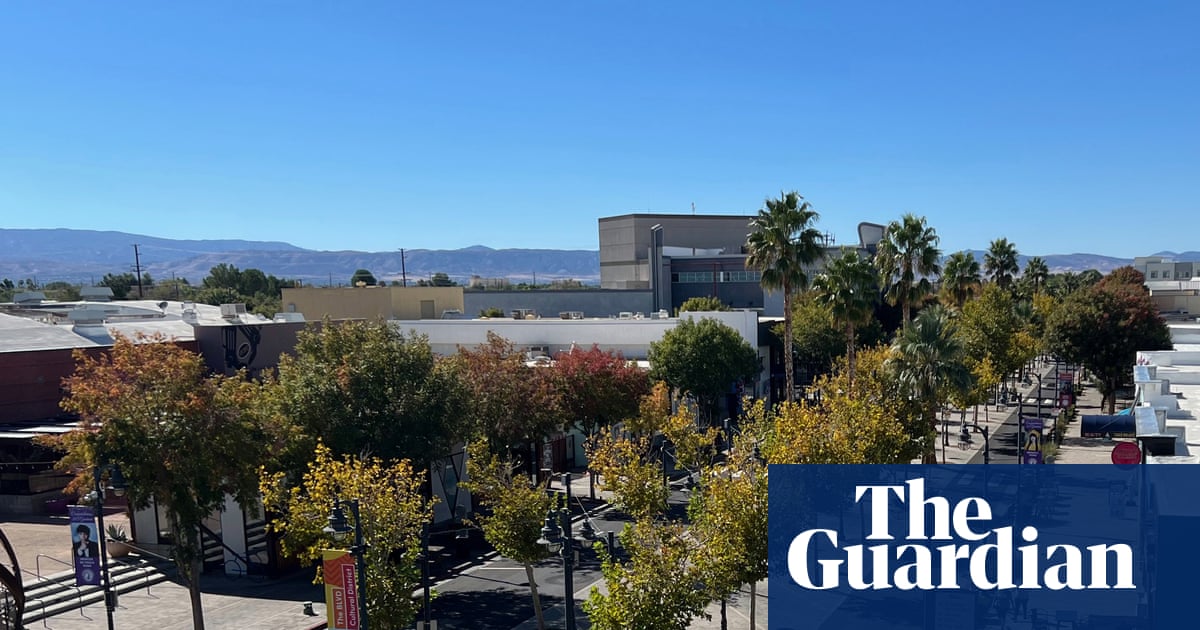
Lancaster, California: how a highway became a leafy, walkable nine-block boulevard
The city spent $11.5m in 2010 replacing three lanes of West Lancaster Boulevard with tree-lined ramblas; officials say the project generated more than $270m in economic output within four years.
At a glance
- Lancaster, California spent $11.5m in 2010 converting nine blocks of the old Highway 14 into a walkable, tree-lined BLVD.
- The city says the project generated over $270m in economic output, $130m in investment and hundreds of jobs within four years.
- The BLVD now hosts 250 public and private enterprises, and residents credit it with creating a shared community gathering space.
Lancaster, California, spent $11.5m (£8.5m) in 2010 to turn nine blocks of West Lancaster Boulevard — a stretch of the old Highway 14 — into a walkable, tree-lined district known as the BLVD.
The redesign replaced the three centre lanes of the former five-lane road with a series of tree-lined ramblas, a Spanish word for both avenue and watercourse that refers to the dry stream beds that served as streets in early cities. The work was planned and funded by the city's redevelopment agency.
Today the BLVD is home to 250 public and private enterprises, including banks, tattoo shops, restaurants, museums, a performing arts centre and a public library. City Hall stands a block south.
Economic results
According to the city, the district generated more than $270m in economic output within four years of completion, attracted $130m in investment, created hundreds of jobs and prompted the building or renovation of hundreds of housing units.
Residents and workers describe benefits that are harder to count. John Elford, manager of the Lancaster public library, was a reference librarian when construction began and recalls angry customers complaining about the disruption to a main city thoroughfare. "Suddenly it was all done, and they had the grand opening," he said. "Everybody loved it and the complaints stopped."
Elford said the more attractive, walkable space encouraged people to leave their cars, and residents who had never visited the library began to come in — asking where the fiction or non-fiction sections were rather than for a specific title, and staying to read. He said visitors have also got to know unhoused patrons, sometimes watching them change through contact with the library's social workers.
Business and community
Property and business owners partnered with the city in 2013 to create the BLVD Association, a property-based improvement district funded by city taxes. In 2016 the association launched an ambassador programme whose representatives walk the district to help visitors and businesses.
Brian Morris Jr, an ambassador for six months, said he has seen occasional begging or break-ins but not enough to stop the area feeling safe and livable. Nicole Stevens, who runs Pretty Little Poppy Marketplace and has lived in Lancaster since 1993, said the reimagining has brought small businesses and families together. Alex Arreola, a cashier and marketer at the Sassy Bird restaurant, called the walkable district "the best place in Lancaster right now".
A museum opened on the BLVD in 2012, housing exhibits and education on the history, art and culture of California's Antelope Valley. Its art programme manager, Kim Calderwood, said people often discover it while wandering the street. Nanette Rushing, who has owned the Nantiquez Vintage Flair shop on the BLVD for 10 years, described the street as "kind of a melting pot" that shapes food, music and art. Calderwood said the main complaint she hears is about slow speed limits.
A version of this article was originally published in Governing.
Source: The Guardian World.
Questions and answers
- How much did Lancaster, California spend on the BLVD project?
- The city invested $11.5m (£8.5m) in 2010 to redevelop nine blocks of West Lancaster Boulevard, replacing three centre lanes of the former five-lane road with tree-lined ramblas.
- What economic impact did the BLVD redevelopment have?
- According to the city, it generated more than $270m in economic output within four years of completion, attracted $130m in investment, created hundreds of jobs and led to hundreds of housing units being built or renovated.
- What is on the BLVD in Lancaster, California?
- The nine-block district has 250 public and private enterprises, including banks, restaurants, tattoo shops, museums, a performing arts centre and a public library, with City Hall a block south.

















