IMF tells John Healey to cut pensions and welfare instead of taxing banks
The IMF says Britain's high tax burden means the budget should focus on spending reform, as City lobbyists warn that bank tax rises would cut lending.
At a glance
- The IMF has told John Healey to find budget savings in pensions and welfare rather than raising taxes on banks.
- UK Finance warns restoring the bank surcharge to 8% would cut annual GDP by £1.2bn by 2029-30 and reduce lending.
- Former banker Philip Augar says banks are enjoying boom conditions and could absorb a £2bn to £3bn tax rise.
The International Monetary Fund has urged John Healey to look to pensions and welfare for savings at this month's budget rather than raising taxes on Britain's banks.
Helge Berger, deputy director of the IMF's European department, was asked about bank taxes after the Guardian revealed that Healey plans to tap the sector for additional revenue. Berger replied that given the UK's current high tax-to-GDP ratio, it might be better to "put the emphasis" on cuts.
He said that if additional tax revenue were needed, reforming property taxes or VAT might be a good place to start. He added: "Ultimately, with taxes roughly at 40% of GDP – historically, for Britain, a high number – then of course balancing these measures on the fiscal [spending] side, doing a bit more there, makes good sense."
As examples, he highlighted the pensions triple lock, which Labour has already said it will reform, and "better targeting [of] social benefits". He said: "I think that's where you would put the emphasis, rather than the tax that you mentioned." Berger was speaking in Bangkok, where the IMF has held its annual meetings this week.
Banks lobby against a rise
City lobbyists have been warning the government that higher taxes could force banks to throttle lending, hitting the economy and even pushing some lenders to move jobs and operations abroad.
In a letter sent to Healey and copied to the prime minister, Andy Burnham, on 12 October – days before news of the planned tax rise broke – the chief executive of UK Finance, David Postings, shared research commissioned by the lobby group. It suggested that reversing Conservative cuts to the bank surcharge, taking it back to 8% from 3%, would leave annual UK GDP £1.2bn lower in real terms by 2029-30 than it would otherwise have been.
Postings said it would also mean banks issuing fewer business loans and mortgages, with lending likely to be £10.4bn lower in 2029-30 than if the surcharge was held at 3%. "The UK's banking sector already makes a vital contribution to the wider economy. To sustain this vital contribution, the budget should avoid any increases in bank-specific taxes, as this would risk constraining the sector's ability to lend and invest," his letter said.
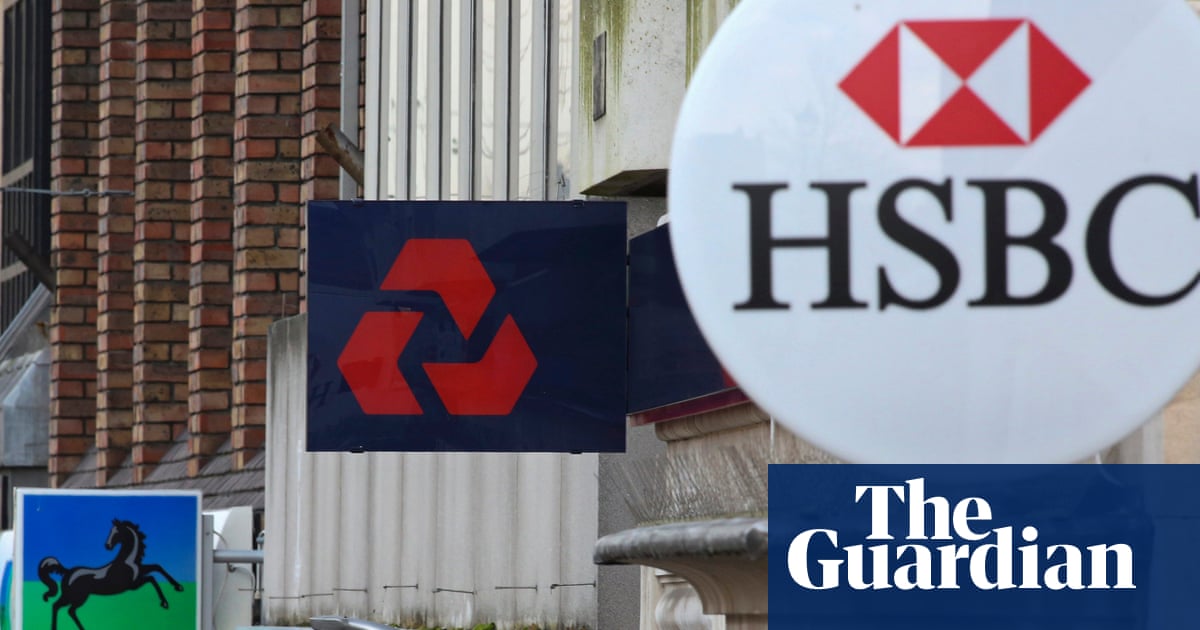
TUC analysis of HMRC corporate tax receipts shows the Treasury has already lost out on £6bn over the three years since the surcharge cut came into force in 2023. Banks have meanwhile been reporting strong profits, largely off the back of high interest rates, with bosses increasing bonus pots and handing billions of pounds to shareholders. The UK's four largest lenders – HSBC, NatWest, Barclays and Lloyds – reported £29.2bn in profits over the first six months of the year, with almost half, £13.7bn, pledged to investors through dividends and share buybacks. Over the past five years those banks have made £200bn in pre-tax profits.
"Too big to fail and too big to tax"
Philip Augar, an author and former banker, said the banks were "enjoying boom conditions", partly due to good management but partly due to economic conditions "not of their own making". He said there was room for a "moderate increase in taxation" that would raise about £2bn to £3bn a year.
"The prime minister has said that the burden of taxation has to fall on those with the broader shoulders, and at the moment, it's hard to think of a sector where the shoulders are much broader than the banking sector," Augar told the BBC's Today programme on Friday.
He said banks – including those bailed out in the 2008 financial crisis – could not have it both ways: "Banking is cyclical, it's true. But when it hits really rocky times it expects the taxpayer to bail them out. When it hits boom times, it expects some kind of special treatment. Banks can't be too big to fail and too big to tax."
Some banks have threatened to pull investment, and potentially jobs, from the UK if taxes rise, with lobby groups noting smaller overall tax charges in rival financial centres such as Frankfurt, Dublin and Amsterdam. Jamie Dimon, who heads the largest bank in the US, JP Morgan, said in May that he could scrap plans for a new £3bn London headquarters if the UK government became hostile towards banks.
Augar said the government needed to see past the bluster, describing a "coordinated campaign" by big international banks with businesses in Britain, including JP Morgan, Citigroup, Santander and HSBC. "But they always say this, [and] they rarely move. I think that if the chancellor judges this right, with a moderate increase in taxation or some other form of getting money from the banks, then the business will remain in the UK."
Source: The Guardian Business.
Questions and answers
- What did the IMF tell John Healey about bank taxes?
- Helge Berger of the IMF's European department said the UK's high tax-to-GDP ratio meant the emphasis should be on spending restraint, citing the pensions triple lock and better targeting of social benefits.
- What would restoring the bank surcharge to 8% cost the economy?
- Research commissioned by UK Finance suggests reversing the cut from 8% to 3% would leave annual UK GDP £1.2bn lower in real terms by 2029-30, with lending £10.4bn lower.
- How much profit have UK banks been making?
- HSBC, NatWest, Barclays and Lloyds reported £29.2bn in profits in the first six months of the year, with £13.7bn pledged to investors, and £200bn in pre-tax profits over five years.















