France Faces Widespread Turmoil as Weekend Riots Lead to 2,400 Arrests
President Emmanuel Macron condemned widespread urban destruction following massive demonstrations over public services and the cost of living.
At a glance
- French police arrested 2,400 people nationwide, including 855 in Paris, during intense weekend unrest.
- Protests that began with student grievances over education broadened to target the rising cost of living and public service cuts.
- President Emmanuel Macron denounced the riots as political rivals condemned the state's security and policy response.
French authorities have arrested about 2,400 people across the country following a weekend of widespread civil unrest, property destruction and mass demonstrations. In Paris alone, police detained roughly 855 individuals as demonstrations initially organized around student grievances escalated into nationwide street violence.
In a televised address on Sunday evening, President Emmanuel Macron condemned what he termed the "unbridled violence" that swept multiple urban centers. Macron sought to separate the legitimate demands of peaceful demonstrators from "factious groups from the ultra-left" and opportunistic looters who smashed storefronts, ignited barricades, and attacked civic infrastructure.
Escalation Across French Cities
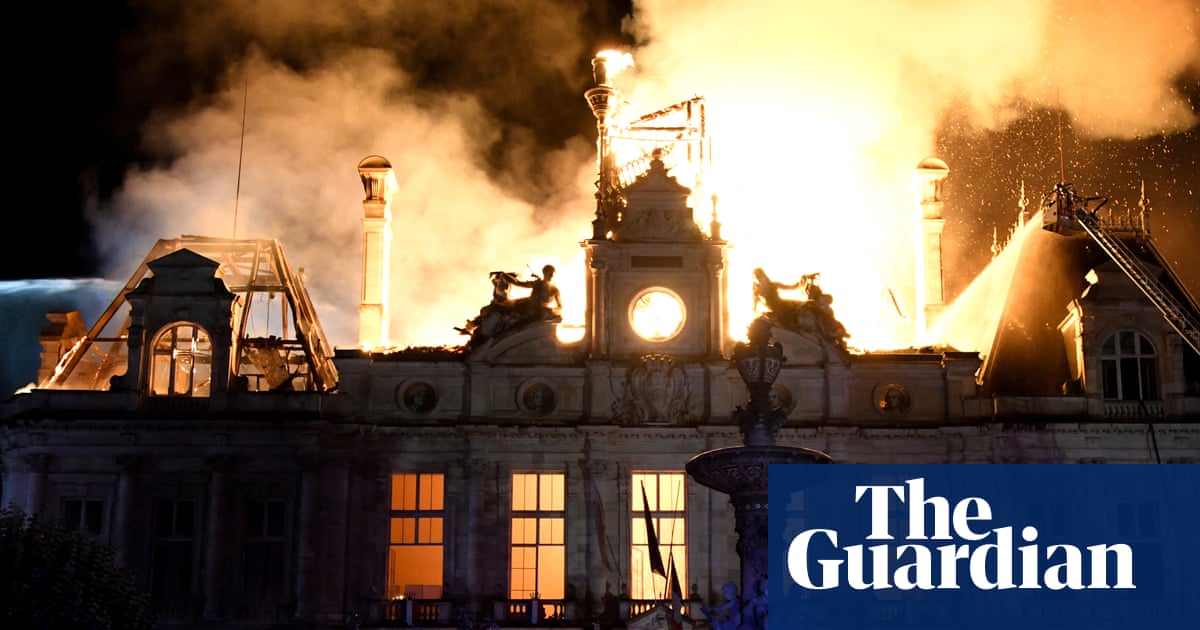
While hundreds of thousands of citizens—predominantly students and families—participated in peaceful marches on Saturday, smaller splinter factions engaged in severe vandalism. In Limoges, demonstrators set the municipal town hall on fire, causing its historic spire to collapse. Elsewhere, rioters breached the city hall in Marseille and set alight the tourism office in Lyon. In Paris, clean-up crews confronted shattered storefronts, burned-out vehicles, and lingering teargas in transit hubs such as the Place de la République.
Lamia El Aaraje, the Socialist deputy mayor of Paris, remarked that the capital witnessed an unprecedented level of violence. Meanwhile, protests reflecting similar economic and social grievances also appeared in Spain, Portugal, and Italy.
Deepening Grievances and Political Backlash
The unrest grew out of student-led walkouts that began in September, focused on deteriorating school buildings, crowded classrooms, and an unpopular university admissions framework. Those initial grievances quickly expanded to encompass broader economic frustration, including high living costs, surging fuel prices, and cuts to public services, drawing support from trade unions and Yellow Vest figures.
The government's containment strategy has drawn sharp criticism from across the political spectrum. Critics cited instances of heavy-handed policing that resulted in serious injuries to teenagers, alongside tactical errors that left city centers exposed to looting while police blocked peaceful march routes. Marine Tondelier, leader of the French Greens, called for the dismissal of Paris police chief Laurent Nuñez, stating that peaceful participants faced violence while entire neighborhoods were abandoned to rioters.
Opposition leaders have leveraged the crisis against the administration. Guillaume Guérin, the conservative mayor of Limoges, characterized the situation as a "colossal failure of the state," while far-right leader Marine Le Pen labeled the riots a direct threat to democracy, leaving Macron under intense pressure to deliver substantive policy concessions.
Source: The Guardian
Questions and answers
- What sparked the recent wave of protests in France?
- The demonstrations began in September over school conditions, class sizes, and university admissions before expanding to broader frustrations over inflation and fuel costs.
- How much damage occurred during the weekend riots?
- Rioters collapsed the town hall spire in Limoges, set fire to Lyon's tourism office, breached Marseille's city hall, and burned vehicles and storefronts in Paris.
- How has the French government responded to the unrest?
- President Emmanuel Macron condemned the violence on national television, drawing a line between peaceful demonstrators and destructive factions as police carried out 2,400 arrests.

















