EV Battery Supply Chains Linked to Rainforest Clearing in Indonesia
Corporate trade records trace nickel in batteries for Volkswagen, Ford, and Tesla to mines driving deforestation on indigenous lands in Sulawesi.
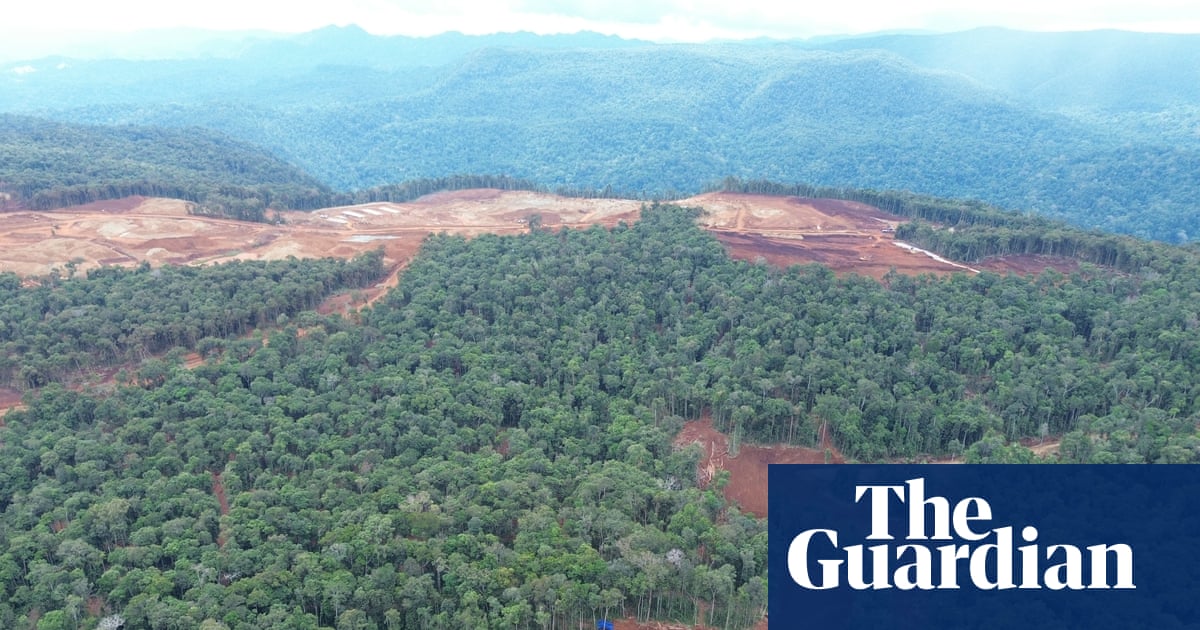
At a glance
- An investigation linked nickel used by VW, Ford, and Tesla to primary rainforest destruction in Sulawesi, Indonesia.
- Ore from the Cahaya and Hengjaya mines was traced through Chinese processor Huayou Cobalt to battery manufacturer CATL.
- Mine operator Sulawesi Cahaya Mineral received sanctions after illegally clearing more than 450 hectares of forest.
Electric car batteries used by major automakers including Volkswagen, Ford, and Tesla have been linked to rainforest destruction on indigenous lands in Indonesia, according to a cross-border media investigation published in October.
Trade records and corporate disclosures traced nickel from two concessions on the island of Sulawesi—the Cahaya and Hengjaya mines—through regional refineries and Chinese processing plants operated by Zhejiang Huayou Cobalt. Huayou supplies cathode material to Contemporary Amperex Technology Co. Limited (CATL), the world’s biggest battery producer, as well as South Korea's LG via Poland. Both battery makers supply global vehicle manufacturers.
Impact on Indigenous Woodlands
The mining concessions overlap primary rainforest traditionally inhabited by the indigenous Tolaki people. Spatial analysis from geospatial firm The TreeMap revealed that nickel extraction accounts for two-thirds of forest loss recorded since 2001 within the 21,000-hectare Cahaya concession, operated by Sulawesi Cahaya Mineral (SCM).
SCM cleared 330 hectares of forest in 2024 and faced two administrative sanctions for clearing over 450 hectares outside permitted zones. The operator sent 11 million tonnes of limonite ore to Huayou’s smelter in Morowali in 2024, followed by nearly 12.5 million tonnes in 2025. In turn, Huayou exported $606 million worth of mixed hydroxide precipitate from Morowali to China in 2024 and $470 million in 2025.
Carmakers Respond
While electric vehicles produce fewer emissions than fossil fuel cars, soaring demand for critical minerals has raised environmental challenges. The International Energy Agency expects global nickel demand to double to 5.5 million tonnes by 2040. Furthermore, research published in Nature Communications found that tree loss can elevate the carbon footprint of nickel from the most degraded sites up to 500 times higher than previously calculated.
In responses to the findings, several automakers emphasized their supply chain standards. Volkswagen noted it could not exclude the companies from its supply network, while Ford, General Motors, and Stellantis acknowledged environmental risks in Indonesian nickel extraction. Renault and Volvo Cars identified indirect supplier links or cited ongoing supplier audits. Tesla, CATL, Huayou, and SCM did not respond to requests for comment.
Source: The Guardian Business.
Questions and answers
- Which carmakers are linked to Indonesian nickel mining?
- Automakers identified as end-users of cathodes or batteries from the traced supply chain include Volkswagen, Ford, Tesla, Volvo, General Motors, BMW, Stellantis, Renault, and Hyundai.
- Why is nickel mining causing deforestation in Sulawesi?
- Sulawesi holds the world's largest nickel reserves, and government exemptions have permitted mining operations in production forests inhabited by the indigenous Tolaki people.
- How much did the mining operator expand beyond allowed zones?
- Sulawesi Cahaya Mineral received two administrative sanctions for clearing more than 450 hectares of forest beyond its permitted boundaries.















