Elections in Brazil, Serbia and Hungary deal setbacks to Trump allies
Recent votes abroad delivered defeats to figures aligned with the US president, while analysts say his influence over foreign elections remains limited.

At a glance
- Brazil's Luiz Inácio Lula da Silva won reelection, defeating Trump-aligned Flávio Bolsonaro.
- Serbia's Aleksandar Vucic and Hungary's Viktor Orban lost elections despite their Trump ties.
- Analysts say elections are decided nationally first, and Trump's foreign influence is limited.
A string of recent elections abroad has handed defeats to candidates aligned with U.S. President Donald Trump, testing the influence he has demonstrated in Republican primaries at home.
Brazilian President Luiz Inácio Lula da Silva won reelection on Sunday, defeating Trump-aligned Flávio Bolsonaro, whose father, Jair Bolsonaro, was also a Trump ally. The same weekend, a student-led movement in Serbia defeated the ruling party of Aleksandar Vucic, a populist leader who had cultivated ties with Trump and his circle. Vucic, Serbia's president from 2017 and prime minister from 2014 to 2017, said in his concession speech that the loss came from the "legitimization of a revolution carried out by the people with direct support from various European countries and the American deep state, the one that opposes President Trump."
Hungary and Israel
Earlier this year, Vice President JD Vance visited Hungary for two days and publicly backed then-Prime Minister Viktor Orban, a staunch Trump ally who also had Trump's endorsement. Orban lost the election and was ejected from office after 16 years.
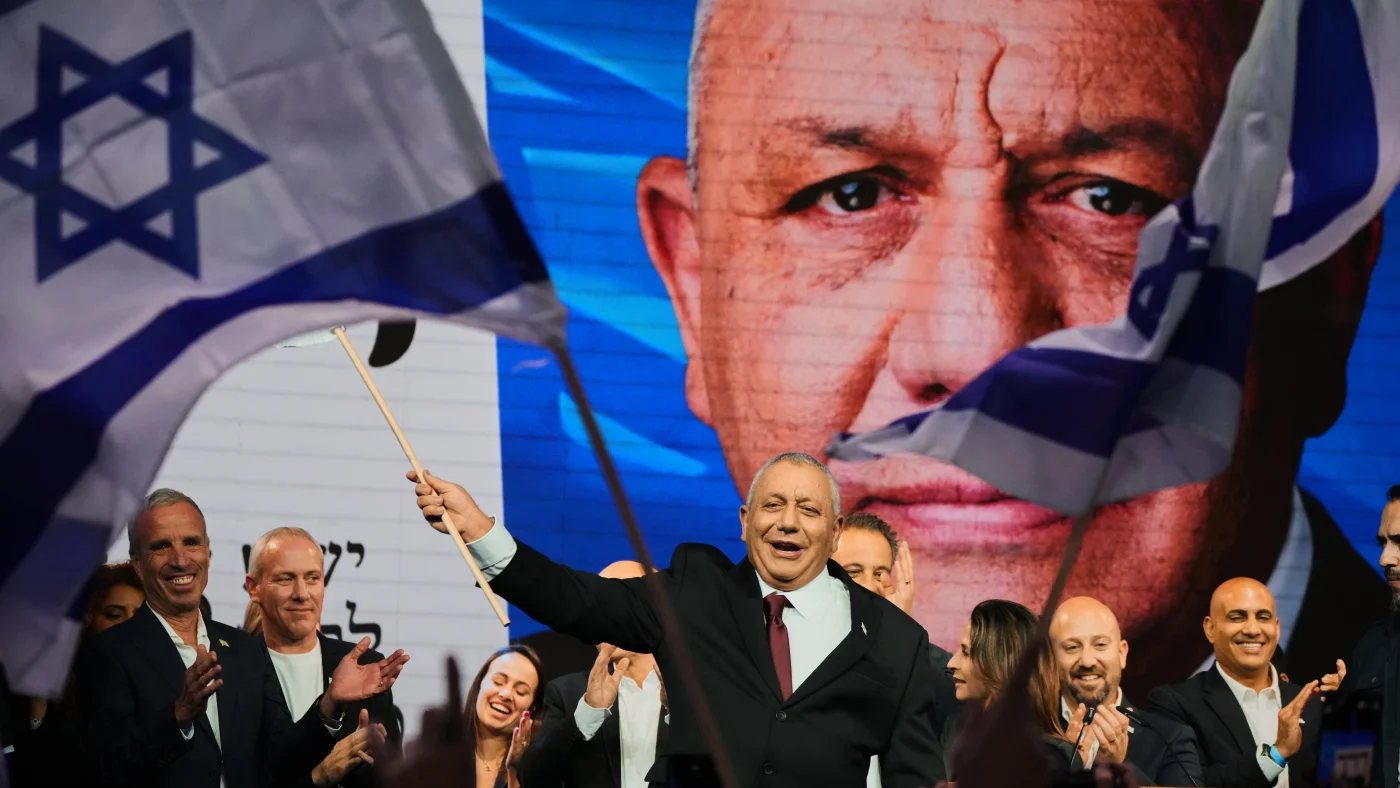
In October, Trump endorsed Israeli Prime Minister Benjamin Netanyahu for reelection. Results of the Oct. 27 election are not finalized, but the Associated Press said Netanyahu's Likud party appeared to have lost its majority in the country's parliament.
Trump claimed in August that 97% of Republican candidates he backed had won their primary races, and he has picked off politicians he disliked, including Sen. John Cornyn of Texas and Rep. Thomas Massie of Kentucky.
Experts: elections are national first
Trump's influence on any single foreign election remains variable, analysts said. "Elections are always national first and regional or global a very distant second," Cas Mudde, a professor of international affairs at the University of Georgia, told CNBC.
Stijn van Kessel, a professor of comparative politics at Queen Mary University of London, said it is not clear Trump ever had great influence over far-right actors elsewhere. "Far-right parties and politicians like to celebrate each others' victories as it allows them to portray themselves as part of a successful global movement," he said, adding that such relationships can sour quickly when national interests collide or the foreign partner turns toxic in the eyes of the domestic electorate.
He pointed to the fallout between Trump and Italian Prime Minister Giorgia Meloni earlier this year, which stemmed from Italy's refusal to allow U.S. aircraft to use one of the NATO airbases for its war on Iran. Trump later claimed Meloni "begged" him for a photo at the G7 summit, a claim that sparked a denial from Meloni.
Far right still strong in some places
Right-wing movements remain strong in numerous countries. In France, Marine Le Pen is currently the frontrunner to succeed President Emmanuel Macron, according to a compilation of polls by Politico, though she has historically started out leading crowded fields before support consolidates around a more moderate candidate. In Germany, the far-right Alternative fur Deutschland won 20.8% of the vote in the country's February 2025 federal election, making it the largest opposition party. Trump ally Javier Milei leads Argentina, and Colombia's new president, Abelardo de la Espriella, was elected on a far-right platform.
Mudde noted that most far-right leaders disassociate themselves from Trump when he becomes more unpopular in their country. Trump's poll numbers remain near a record low in the U.S. over issues including the Iran war and the cost of living as energy prices soar.
"Voters are willing to give anyone a shot when they are economically frustrated, but when those experiments fail, they move on to something else," said David Barker, a professor of government at American University in Washington, D.C. At this point, he said, Trump "undermines his allies' ability to maintain support."
Source: CNBC.
Questions and answers
- Did Trump-backed candidates lose elections abroad?
- Yes. Brazil's Luiz Inácio Lula da Silva defeated Trump-aligned Flávio Bolsonaro, and Trump ally Viktor Orban lost Hungary's election after 16 years. Serbia's Aleksandar Vucic also lost.
- How much influence does Trump have over foreign elections?
- Analysts told CNBC his influence is variable. Cas Mudde of the University of Georgia said elections are "always national first," with regional or global factors a very distant second.
- Which far-right leaders are gaining ground globally?
- In France, Marine Le Pen is the frontrunner to succeed Emmanuel Macron, according to Politico's poll compilation. Germany's AfD won 20.8% in the February 2025 federal election, and Trump ally Javier Milei leads Argentina.