Australia's AI datacentre boom: RBA inflation warning and US-style voter backlash
The Reserve Bank has flagged datacentre investment as an inflation pressure after raising rates to an 18-year high, as Labor weighs a plan to attract AI investment and community opposition grows.
At a glance
- The Reserve Bank lifted interest rates to an 18-year high, citing datacentre-related investment among inflation pressures.
- Deloitte says Australia's $1.39tn pipeline includes 37 datacentres worth $141bn, up 36% in a year.
- NBC exit polls found 56% of US voters called AI and datacentres crucial or major midterm factors.
Australia's Reserve Bank has identified datacentre-related investment as a source of inflationary pressure, after lifting interest rates to an 18-year high this week, while the Albanese government mulls a long-awaited plan to attract AI investment.
RBA governor Michele Bullock said parts of demand had been stronger than expected, "including due to datacentre-related investment", which she said added to inflation at a time when the domestic economy was already capacity constrained. The bank's statement of monetary policy said "AI-related investment is driving rapid growth in prices for technology-related goods".
Bullock warned that "some pain now will prevent even worse pain", but when asked when AI might start having a positive impact on inflation, she said: "your guess is as good as mine." She also said that if AI dramatically improved productivity, it could raise the "neutral interest rate" – so productivity gains would not necessarily mean lower rates.
Benefits may arrive much later
Deloitte Access Economics reported on Thursday that Australia's $1.39tn investment pipeline included 37 datacentres worth $141bn, a 36% increase in a year. Deloitte director Sheraan Underwood said the boom was "competing directly with housing and infrastructure for workers and materials", and that Australia had "less room to absorb" the surge given high inflation.
The firm said construction gains would be "substantial" but the "direct economic payoff" would not be as big, because technology fit-outs are largely imported goods and few workers are needed to run the finished facilities. It warned: "Construction demand and inflation pressures are arriving now, while the productivity dividend may come much later."
Political attention has turned to government spending, with the shadow energy minister, Dan Tehan, criticising a "blowout" in home battery and green subsidy costs from a budgeted $2.3bn to $8.5bn.
US backlash offers a warning
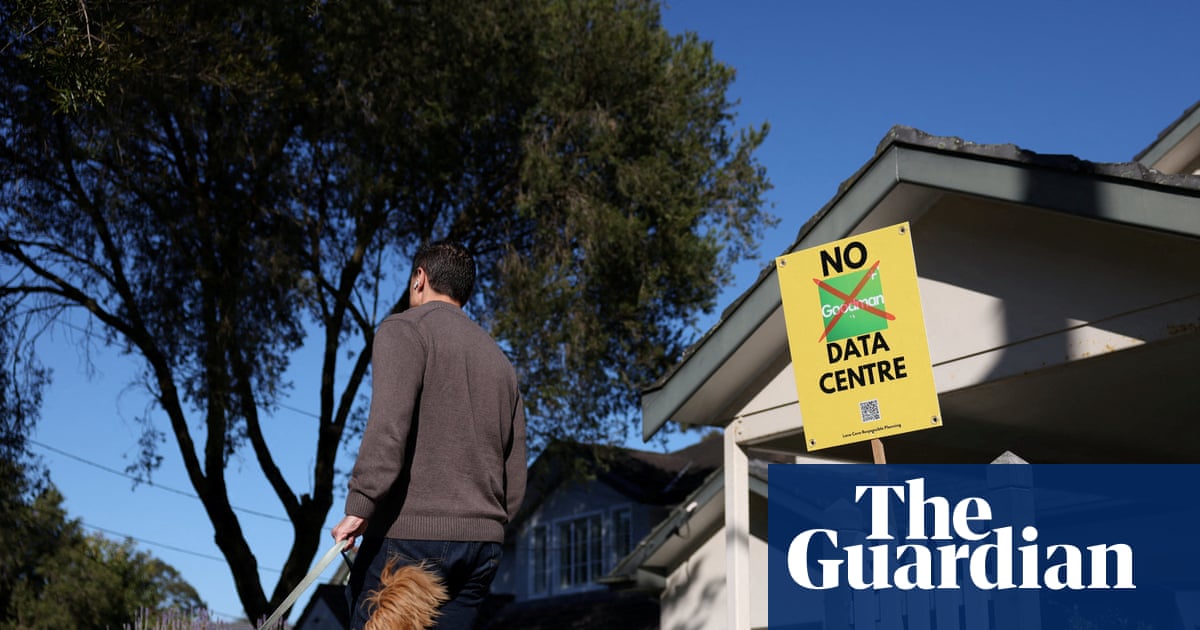
The column points to the US midterms, where Politico-reported polling found half of Americans opposed datacentres near their homes, and NBC exit polls found 56% of voters called AI and datacentres "crucial" or "major" factors. In dozens of towns, votes to restrict construction won overwhelmingly, according to vote trackers. Australia's backlash is smaller but growing, with community groups organising and protesting.
The article argues Labor must better explain the benefits of the rollout and look beyond monetary policy for inflation responses. Senator David Pocock has proposed a Senate inquiry into alternatives, including "temporary, progressive" changes to income tax or superannuation and taxes on windfall profits and gas exports. Economist Saul Eslake has said lifting the superannuation rate from 12% to 13% would take money out of workers' pockets and curb spending.
Source: The Guardian World.
Questions and answers
- Why is the Reserve Bank concerned about datacentres?
- Governor Michele Bullock said datacentre-related investment was stronger than expected, adding to demand and inflation while the domestic economy was already capacity constrained.
- What did the US midterms show about opposition to datacentres?
- Politico-reported polling found half of Americans opposed datacentres near their homes, and vote trackers showed proposals to restrict construction won overwhelmingly in dozens of towns.
- When will Australians see the benefits of the AI boom?
- The timing is unclear. Bullock said "your guess is as good as mine" when asked about AI's positive impact on inflation, and Deloitte said the productivity dividend may come much later.

















