Aipac stops endorsing candidates as US opinion on Israel shifts
The pro-Israel lobby group will keep running its Super Pac and donor network, as critics say its brand has become a liability for candidates.
At a glance
- Aipac said on Wednesday it will stop endorsing candidates and making direct contributions to them.
- The group will keep running its Super Pac and channelling millions to pro-Israel candidates via donors and members.
- Aipac members gave over $90m this cycle, far more than the $3m its Pac donated directly to candidates.
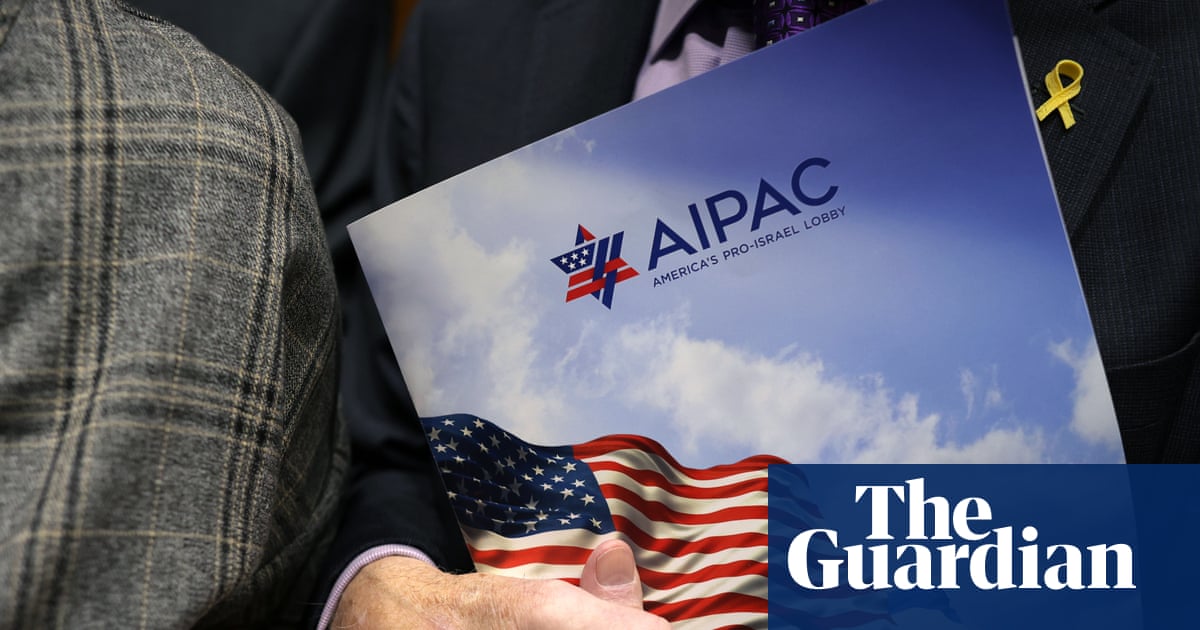
The American Israel Public Affairs Committee (Aipac), the most prominent pro-Israel lobby group in the US, said on Wednesday it would stop endorsing candidates and making direct contributions to them.
The reversal reflects how far US public opinion on Israel has shifted during the war in Gaza, and how support for Israel has become a liability for some candidates rather than an automatic advantage.
Aipac is not withdrawing from US elections. It said it would keep operating its deep-pocketed Super Pac, United Democracy Project, and would continue to channel millions of dollars to pro-Israel candidates through individual donors and its members.
Money still flowing
The New York Times reported on Wednesday that Aipac, which normally backs Democrats, planned to give as much as $9m to a Pac supporting Republican Senate candidate Mike Rogers over Abdul El-Sayed in Michigan. It had already spent $32m seeking to defeat El-Sayed, an outspoken critic of Israel, in the primaries.
In a letter to members first reported by Jewish Insider, Aipac's leadership called the 2026 election "one of the most challenging environments in recent memory" and predicted the "challenges we are confronting will continue to grow in the years ahead". They wrote that the group must build "a more strategic, consequential, and nimble political operation" to win the fight for the future of the country and the U.S.-Israel alliance. "The only tactic we're married to is the most effective one."
Aipac said it helped 290 candidates this cycle and that 29 it described as "anti-Israel" were defeated. A spokesperson told Jewish Insider that members had contributed more than $90m to candidates this cycle, against $3m the group gave directly through its Pac.
The group has also suffered losses, including in Michigan and New Jersey. More than a dozen candidates who accepted Aipac contributions in the past have since distanced themselves from it, and New York congressman Pat Ryan said last week he would return nearly $250,000.
Critics respond
Beth Miller, political director of Jewish Voice for Peace Action, one of Aipac's most vocal critics, said the shift showed Aipac's brand had become toxic in politics and that fewer candidates were willing to be publicly linked to it.
Political analyst Trita Parsi wrote that Aipac had long been seen as invincible but now carried such toxicity that it did not want its own name on its political donations.
Journalist Dion Nissenbaum, whose documentary on Aipac was published this week, told the Guardian the announcement was the "first real admission from Aipac that their campaign strategy has backfired". But he warned that if the Super Pac kept operating, it could be an attempt to reinvent itself "without ceding the battlefield".
Hamid Bendaas of the Institute for Middle East Understanding Policy Project, one of the groups behind the Reject Aipac campaign, said Aipac had been experimenting with ways to make its support less traceable. He called the change "akin to an animal that chews its leg off to get out of a bear trap" — a last resort to survive and stay relevant.
Hady Amr, a former US state department official for Israeli and Palestinian affairs, said the approach was not new, adding: "This is Aipac going back to their tried and true approach."
Aipac did not respond to a request for comment.
Source: The Guardian.
Questions and answers
- Why has Aipac stopped endorsing candidates?
- Aipac told members the 2026 election was one of the most challenging environments in recent memory, and predicted the difficulties would grow. Critics say its brand has become toxic and open backing now risks hurting pro-Israel candidates.
- Is Aipac leaving US elections?
- No. It will keep operating its Super Pac, United Democracy Project, and will still direct money to candidates through individual donors and members, who gave more than $90m this cycle.
- How much has Aipac spent in Michigan?
- It already spent $32m seeking to defeat Senate candidate Abdul El-Sayed in the primaries, and the New York Times reported it planned to give as much as $9m to a Pac backing his Republican rival, Mike Rogers.

















